OC Coastkeeper’s Litigation Stops Newport Harbor Confined Aquatic Disposal Facility and Improves Dredging Project
By Newport Indy Staff – August 29, 2024
Source: Newport Beach Independent https://www.newportbeachindy.com/oc-coastkeepers-litigation-stops-newport-harbor-confined-aquatic-disposal-facility-and-improves-dredging-project
As the result of a lawsuit filed by Orange County Coastkeeper over Endangered Species Act and National Environmental Policy Act concerns, the United States Army Corps of Engineers has revised its Newport Harbor dredging project.
The updated plans feature a better solution for contaminated dredged material and a monitoring program that protects green sea turtles and marine mammals.
“After years of advocacy and enforcement actions, we are excited to see the Corps’ dredging project proceed with an improved design that better considers the health of Southern California’s coastal ecosystem,” said Garry Brown, founder and president of Orange County Coastkeeper. “The new plan for the dredged material is a big win for our waters and helps lower costs. Rather than burying contaminated sediment underneath Newport’s turning basin in a poorly designed disposal facility, the material will be repurposed and contained in an expansion project at the Port of Long Beach.”
Reuse of Contaminated Dredged Material
One of Coastkeeper’s primary concerns about the project was how the Corps would transfer and dispose of the dredged material. While dredged material is commonly dumped offshore, samples from Newport Harbor’s federal channels showed exceedances too high in harmful and toxic pollutants, including mercury, polychlorinated biphenyls (PCBs), and dichloro-diphenyl-trichloroethane (DDT), to qualify for offshore disposal.
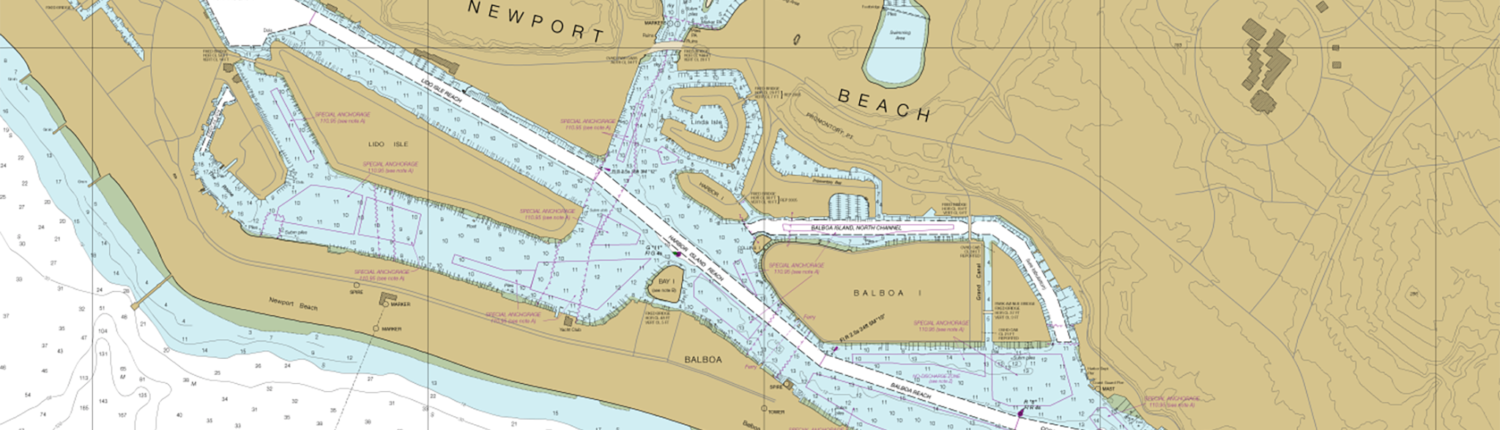
Initially, the Corps had planned to store the contaminated dredged material in a Confined Aquatic Disposal (CAD) facility constructed by the City of Newport Beach. This project entailed burying contaminated material underneath Newport Harbor’s turning basin and thinly covering it with less polluted sediment in hopes of reducing recontamination.
Coastkeeper’s legal experts and marine scientists found the project design flawed, with high risks of endangerment to local waters, wildlife, and community members.
The revised Newport Harbor dredging project will repurpose the dredged material for a pier expansion project in the Port of Long Beach. The material will be placed above the water and permanently sealed with an impervious surface to eliminate the risk of the contaminated material entering the ocean. This update allows the contaminated sediment to be safely repurposed and decreases the need for the Port of Long Beach to dredge for new material.
With the contaminated dredged material repurposed for a Port improvement project, the Corps has permanently suspended the City’s construction permits for the CAD facility, effectively terminating the project.
Protecting Green Sea Turtles and Marine Mammals
Coastkeeper’s lawsuit also addressed concerns over the Corps’ lack of consideration for protected species, such as the green sea turtle, while dredging. Under the Endangered Species Act, the Corps must consult with the National Marine Fisheries Service and the U.S. Fish and Wildlife Service about the project’s effects on certain protected species.
NMFS expressed concern over the project’s potential impacts on green sea turtles, which can be found in many Southern California waterways rich in seagrass, like Newport Bay. These concerns were initially not addressed.
Following Coastkeeper’s lawsuit, the Corps properly consulted with NMFS to analyze what protected species may be affected by its dredging project. The Corps will now incorporate a monitoring program to watch for green sea turtles, marine mammals, and other protected species while dredging occurs to reduce the project’s environmental impact.
Orange County Coastkeeper is a member of Waterkeeper Alliance, which supports over 350 different independent programs across 47 countries. Founded in 1999, the mission of Coastkeeper is to protect swimmable, drinkable, fishable water and promote watershed resilience throughout our region.
Coastkeeper is a nonprofit clean water organization that serves as a proactive steward of our fresh and saltwater ecosystems.
For more information, visit www.coastkeeper.org.
By Newport Indy Staff – August 29, 2024
Source: Newport Beach Independent https://www.newportbeachindy.com/oc-coastkeepers-litigation-stops-newport-harbor-confined-aquatic-disposal-facility-and-improves-dredging-project
The city of Newport Beach, steadily considered a premier boating destination, has made strides, in the last year, to improve services, amenities and educational information available to recreational boaters, residents and tourists. A model was also introduced for a freshly conceived Harbor Department, which also happens to be “new to the world,” according to several city officials.
“A lot has happened/is happening with harbor operations over the past year,” Tara Finnigan, Deputy City Manager, said in an email to The Log. “A lot of thought and effort went into the department structure that the city council approved on June 12.”
In addition to approving the department structure, council members approved the new budget of $1.1 million – up around $200,000 from last year’s budget – to be included in the 2018-19 fiscal year at the June 26 meeting.
Photo Credit: Devon Warren/The Log
The Newport Beach City Council approved an agreement with a firm for federal advocacy services related to harbor dredging efforts and programs, Feb. 27. Carpi & Clay was retained to represent Newport Beach at the federal level in hopes the firm would help bring the city’s issues to the forefront when it comes to harbor dredging.
“The city has been actively working with the U.S. Army Corps of Engineers … and to a limited extent, federal elected representatives, to present and educate them on our dredging needs in Newport Harbor, as well as to get our project on the Corps’ upcoming project funding list,” city staff told council members in a report. “Keeping our project in focus and on the recommended funding list of both the Corps and the many elected representatives that need to review and approve it is, and continues to be, a significant challenge particularly because we do not have a presence in Washington, D.C.”
An Army Corps study in 2017 revealed there is about 650,000 cubic yards of sediment remaining in federal waters and must be dredged to “maintain adequate navigation.”


Share this entry