OC Coastkeeper’s Litigation Stops Newport Harbor Confined Aquatic Disposal Facility and Improves Dredging Project
By Newport Indy Staff – August 29, 2024
Source: Newport Beach Independent https://www.newportbeachindy.com/oc-coastkeepers-litigation-stops-newport-harbor-confined-aquatic-disposal-facility-and-improves-dredging-project
As the result of a lawsuit filed by Orange County Coastkeeper over Endangered Species Act and National Environmental Policy Act concerns, the United States Army Corps of Engineers has revised its Newport Harbor dredging project.
The updated plans feature a better solution for contaminated dredged material and a monitoring program that protects green sea turtles and marine mammals.
“After years of advocacy and enforcement actions, we are excited to see the Corps’ dredging project proceed with an improved design that better considers the health of Southern California’s coastal ecosystem,” said Garry Brown, founder and president of Orange County Coastkeeper. “The new plan for the dredged material is a big win for our waters and helps lower costs. Rather than burying contaminated sediment underneath Newport’s turning basin in a poorly designed disposal facility, the material will be repurposed and contained in an expansion project at the Port of Long Beach.”
Reuse of Contaminated Dredged Material
One of Coastkeeper’s primary concerns about the project was how the Corps would transfer and dispose of the dredged material. While dredged material is commonly dumped offshore, samples from Newport Harbor’s federal channels showed exceedances too high in harmful and toxic pollutants, including mercury, polychlorinated biphenyls (PCBs), and dichloro-diphenyl-trichloroethane (DDT), to qualify for offshore disposal.
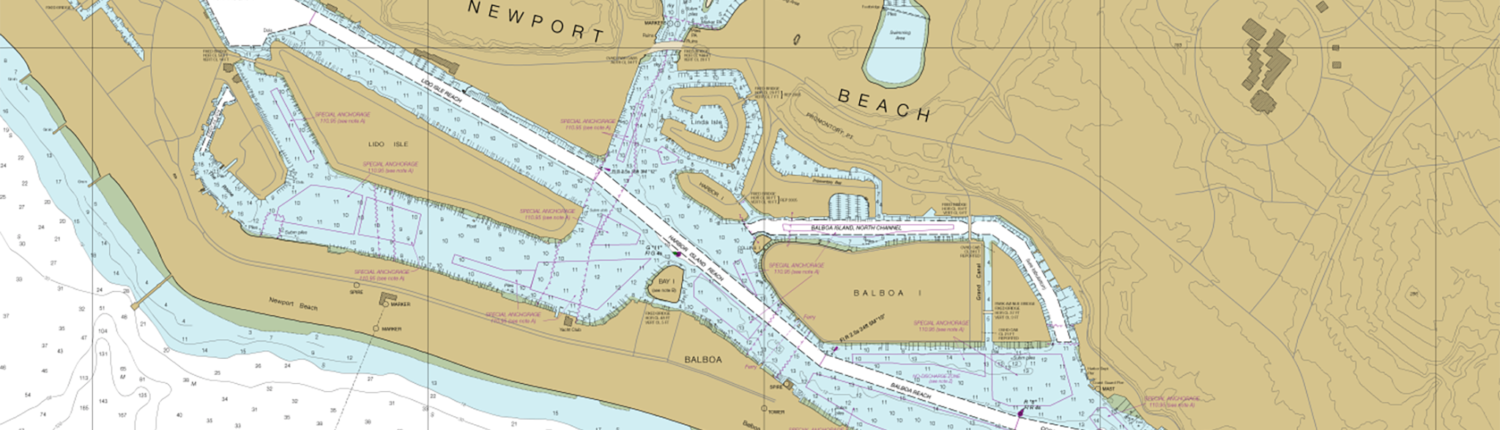
Initially, the Corps had planned to store the contaminated dredged material in a Confined Aquatic Disposal (CAD) facility constructed by the City of Newport Beach. This project entailed burying contaminated material underneath Newport Harbor’s turning basin and thinly covering it with less polluted sediment in hopes of reducing recontamination.
Coastkeeper’s legal experts and marine scientists found the project design flawed, with high risks of endangerment to local waters, wildlife, and community members.
The revised Newport Harbor dredging project will repurpose the dredged material for a pier expansion project in the Port of Long Beach. The material will be placed above the water and permanently sealed with an impervious surface to eliminate the risk of the contaminated material entering the ocean. This update allows the contaminated sediment to be safely repurposed and decreases the need for the Port of Long Beach to dredge for new material.
With the contaminated dredged material repurposed for a Port improvement project, the Corps has permanently suspended the City’s construction permits for the CAD facility, effectively terminating the project.
Protecting Green Sea Turtles and Marine Mammals
Coastkeeper’s lawsuit also addressed concerns over the Corps’ lack of consideration for protected species, such as the green sea turtle, while dredging. Under the Endangered Species Act, the Corps must consult with the National Marine Fisheries Service and the U.S. Fish and Wildlife Service about the project’s effects on certain protected species.
NMFS expressed concern over the project’s potential impacts on green sea turtles, which can be found in many Southern California waterways rich in seagrass, like Newport Bay. These concerns were initially not addressed.
Following Coastkeeper’s lawsuit, the Corps properly consulted with NMFS to analyze what protected species may be affected by its dredging project. The Corps will now incorporate a monitoring program to watch for green sea turtles, marine mammals, and other protected species while dredging occurs to reduce the project’s environmental impact.
Orange County Coastkeeper is a member of Waterkeeper Alliance, which supports over 350 different independent programs across 47 countries. Founded in 1999, the mission of Coastkeeper is to protect swimmable, drinkable, fishable water and promote watershed resilience throughout our region.
Coastkeeper is a nonprofit clean water organization that serves as a proactive steward of our fresh and saltwater ecosystems.
For more information, visit www.coastkeeper.org.
By Newport Indy Staff – August 29, 2024
Source: Newport Beach Independent https://www.newportbeachindy.com/oc-coastkeepers-litigation-stops-newport-harbor-confined-aquatic-disposal-facility-and-improves-dredging-project
By Laylan Connelly – Orange County Register
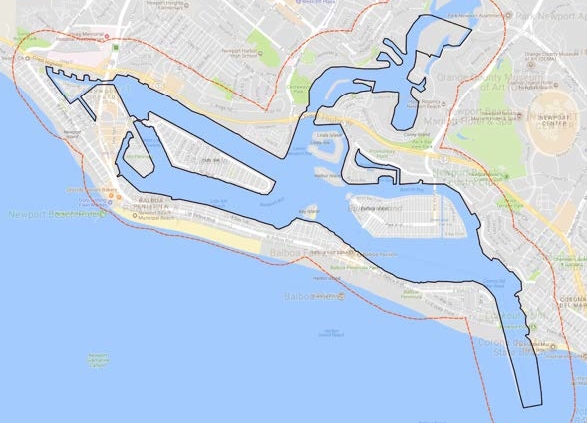
Officials have secured $8.3 million to dredge Newport Harbor in the $14 billion Infrastructure Investment and Jobs Act, but sand replenishment projects for two stretches of Orange County coastline were not included.
U.S. Rep. Michelle Steel said dredging of Newport Beach’s harbor is long overdue in her announcement Wednesday, Jan. 19, about the federal funding, but also stressed the need for added sand along the coastline. Funding for the Surfside-Sunset Replenishment Project, which would seed beaches through Huntington Beach south to Newport Beach will have to hope for final approval from another Congressional appropriations bill, the timeline of which has been unclear.
So is the San Clemente Shoreline Project, which would replenish beaches in the southern city, including improving the buffer of shoreline along a key coastal rail line.
Both projects have been stalled for years, awaiting funding for U.S. Army Corps of Engineers to do the replenishments that help create a beach buffer that would protect roads, homes and infrastructure from ocean flooding, as well as keep beaches – one of the region’s major tourism draws – from disappearing.
In 1962, Congress passed the Rivers and Harbors Act, which required the Army Corps of Engineers to address the impacts of the constructed flood control structures on the sand deposits that should be happening naturally along shorelines.
The $23 million Surfside-Sunset project – $15.5 million in federal money and $7.63 from local agencies – would add 1.75 million cubic yards of sand to Surfside, which would then be pushed down the coast by ocean currents and waves, spreading it 12 miles south to Newport Beach.
The last time sand was added was 2010 – previously the replenishment happened every five to seven years.
“There is more work to do, and I will continue to demand action from the administration and the Army Corps to fully fund the Surfside-Sunset Replenishment Project because we are one natural disaster away from devastation,” Steel said in a statement.
San Clemente has been waiting about two decades for its big replenishment project. The city two years ago received a boost in the amount of $500,000 in federal funding for the design phase.
With no beach left, a wave crashes against the rocks and stairs just below the railroad tracks at North Beach in San Clemente on Wednesday, October 20, 2021.(Photo by Mark Rightmire, Orange County Register/SCNG)
The project would add 251,000 cubic yards of sand from Linda Lane beach to T-Street beach south of the pier. The sand has shrunk so much there in recent years, city leaders have discussed the possibly of moving San Clemente’s Marine Safety Headquarters off the beach. When big surf hits, the surf laps onto the railroad tracks.
About $9.3 million was requested in the bipartisan infrastructure bill by U.S. Rep. Mike Levin for the San Clemente Shoreline Project.
Levin helped secure $30.5 million in federal funding for the Encinitas-Solana Beach Coastal Storm Damage Reduction Project and $1.8 million for the Oceanside Special Shoreline Study, his office announced Wednesday.
The Encinitas-Solana Beach project involves placing 700,000 cubic yards of sand along 7,200 feet of beach in Solana Beach and 340,000 cubic yards of sand along 7,800 feet of beach in Encinitas.
The Oceanside shoreline study will create a plan to mitigate erosion and other effects from the construction of Camp Pendleton Harbor and will restore beach conditions along the affected shores to the conditions that existed before its development.
Levin’s office said he is also “continuing to fight to finalize federal funding for the San Clemente Shoreline Project.”


Share this entry