


May 2026
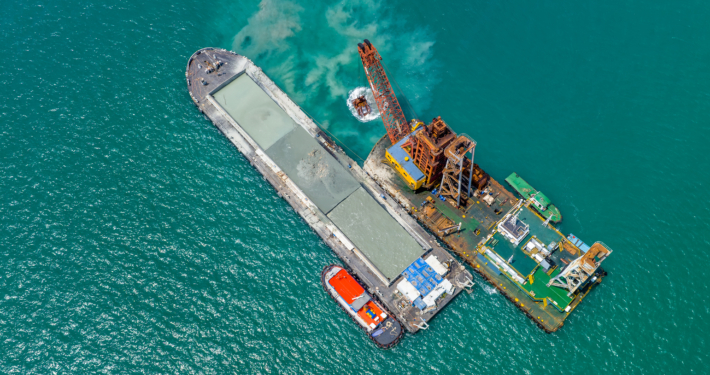
Why Newport Harbor Must Be Dredged
By Marshall ‘Duffy’ Duffield

Vice President Duffy Duffield
Protecting the Crown Jewel of Newport Beach
On any given day, Newport Harbor tells the story of coastal life in Southern California. Early in the morning, sailors ease quietly out of their slips toward the open ocean. Paddleboarders glide across calm water. Later in the afternoon, families cruise the harbor while waterfront restaurants fill with visitors enjoying the view.
More than 8,000 boats call Newport Harbor home—ranging from small tenders and fishing skiffs to yachts exceeding 120 feet in length. Along the shoreline, approximately 1,200 waterfront homes maintain private docks, several major marinas serve hundreds of vessels, and four residential high-rise buildings sit directly on the harbor.
This vibrant harbor lifestyle depends on something most people rarely think about:
The depth of the water beneath their boats. Without proper harbor depth, Newport Harbor could not safely function.
The Hidden Challenge Beneath the Water
Two of the main navigation routes within Newport Harbor are designated federal navigation channels, which are required to be maintained at approximately 25 feet at mean low tide. These channels allow vessels to move safely between the harbor and the open ocean. Over time, however, sediment gradually settles on the harbor floor. When this buildup reduces water depth, problems begin to appear. Boats may run aground during low tides, propellers can strike the bottom, and larger vessels may struggle to safely reach their slips. For a harbor that supports thousands of recreational vessels and waterfront homes, maintaining adequate depth is essential.
To understand why sediment builds up in Newport Harbor, however, we must look beyond the harbor itself—to the watershed miles upstream.
How Development Changed the Watershed
Beginning in the mid-1960s, large portions of inland Orange County began to develop rapidly. Communities expanded throughout the Irvine area as thousands of homes were built over the following decades. Before this development, rainwater falling across the landscape was largely absorbed into open soil and vegetation. As development increased, however, land surfaces. became dominated by roads, rooftops, and paved areas. Rainwater could no longer soak naturally into the ground. Instead, stormwater flowed rapidly across these hard surfaces and into engineered flood-control channels designed to carry runoff safely toward the ocean. Early versions of these channels had earthen sides, and during heavy storms rushing water eroded the banks. Sand and soil were carried downstream toward Newport Bay. Eventually the channels were lined with concrete, preventing erosion of the channel walls. By that time, however, the watershed had already begun delivering large amounts of sediment toward the harbor during major rain events. Over time, that sediment settled on the harbor floor.
Newport Bay: A Natural Estuary
Newport Harbor sits within Newport Bay, which is a natural estuary—a place where freshwater flowing from inland creeks meets the ocean. Estuaries are among the most productive ecosystems in nature. They provide protected nursery habitats where fish and marine life grow before moving into the open ocean. But estuaries also naturally collect sediment. Rivers and creeks carry sand, soil, and organic material downstream where it settles in calm waters.
In nature, this gradual buildup is eventually cleared by extremely large storms—sometimes once every hundred years or more—that flush accumulated sediment out to sea. Ocean currents then carry that sand along the coastline where it helps replenish nearby beaches. If Newport Bay were left entirely to nature, it would slowly fill with sediment and eventually become a shallow mudflat estuary—until one of those massive floods flushed it out again. But Newport Harbor today is far more than a natural estuary. It is a working recreational harbor and maintaining it requires active stewardship.
When the Harbor Began Filling In
By the late 1980s and early 1990s, decades of upstream development had significantly increased sediment accumulation in Newport Bay. Over roughly three decades, the harbor gradually became shallower. Boats began running aground at low tide, and in some areas vessels were literally resting on the harbor bottom during extreme tides. Large dredging operations became necessary to restore safe depths. In my lifetime alone, the Upper Bay filled with sediment three separate times, requiring dredging projects costing well over $50 million to remove the accumulated sand. Clearly, a more sustainable long-term solution was needed.
A Regional Solution Upstream
Recognizing the problem, the County of Orange implemented an ambitious watershed management strategy. Large sediment basins were constructed along San Diego Creek, one of the primary waterways feeding Newport Bay. These basins allow sand carried by stormwater to settle out before the water continues downstream. The captured sediment can then be removed from the basins rather than accumulating in Newport Harbor. This effort became part of a 30-year watershed management program designed to significantly reduce sediment entering the bay. Today, those basins intercept a substantial portion of the sediment that would otherwise reach the harbor. The County is responsible for maintaining these basins at the proper depth to ensure they continue functioning effectively.
Coordinating Watershed Management
Because the watershed spans multiple jurisdictions, regional cooperation is essential. The City of Newport Beach regularly monitors harbor depths and communicates those findings to the County. Oversight of the watershed is coordinated through an Executive Watershed Committee, which ensures sediment basins are maintained, flood-control channels remain clear, and watershed projects continue moving forward. A member of the Newport Beach City Council participates on this committee along with public works officials from upstream municipalities. This collaborative approach has significantly improved sediment management throughout the watershed.
The Federal Role—and Its Limits
Two navigation channels in Newport Harbor are maintained by the U.S. Army Corps of Engineers as part of the federal navigation system. However, federal dredging priorities typically focus on harbors supporting commercial shipping, naval operations, or commercial fishing fleets. Because Newport Harbor primarily supports recreational boating, securing federal dredging funding has historically been challenging. For example, last summer the Army Corps dredged sand near the harbor entrance adjacent to the Coast Guard station, ensuring the Coast Guard vessel could safely enter and exit the harbor. Beyond that area, dredging operations stopped.
A Smarter Way to Maintain the Harbor
Today, thanks to upstream sediment basins and improved watershed management, far less sediment reaches Newport Harbor than in decades past. This creates an opportunity to maintain the harbor more efficiently. Rather than waiting decades for sediment to accumulate before undertaking extremely expensive dredging projects, the Newport Harbor Foundation is exploring a public-private partnership to acquire smaller dredging equipment. With this approach, smaller amounts of sediment could be removed regularly and economically preventing the need for massive dredging projects that cost millions of dollars.
Preserving the Harbor for Future Generations
Maintaining proper harbor depth does more than improve navigation—it also enhances water quality. When channels remain deep, tidal flows bring fresh ocean water into the harbor while flushing stagnant water out. Historically, this natural circulation helped maintain excellent water quality similar to conditions seen in Newport Harbor during the 1940s.
Newport Harbor is truly the crown jewel of Newport Beach. Protecting it requires thoughtful planning, regional cooperation, and a community committed to long-term stewardship.
As someone who has spent decades working to improve the health and management of this harbor, I am proud of the progress that has been made.
“Newport Harbor has given generations of families an extraordinary way of life. Maintaining its depth and health is not simply good management—it is our responsibility to preserve this remarkable harbor for those who will enjoy it long after us.”
May Issue
More of What’s Inside

A Message from Dennis Durgan
President of the Newport Harbor Foundation
We are deeply grateful to each and every one of you—our generous donors, dedicated residents, and passionate supporters—who continue to champion the mission of the Newport Harbor Foundation. Your unwavering commitment to preserving and protecting our beloved Newport Harbor makes all of our work possible.
Why Newport Harbor Must Be Dredged
By Marshall ‘Duffy’ Duffield
On any given day, Newport Harbor tells the story of coastal life in Southern California. Early in the morning, sailors ease quietly out of their slips toward the open ocean. Paddleboarders glide across calm water. Later in the afternoon, families cruise the harbor while waterfront restaurants fill with visitors enjoying the view.

The Newport Bay Trash Interceptor
By NHF Staff
We’re excited to share some groundbreaking updates about the Newport Beach Trash Interceptor and the cutting-edge technology that’s helping us better understand and combat marine pollution. Our community’s commitment to protecting Newport Bay and the Pacific Ocean continues to drive innovation and positive environmental change.
Leveraging Resources Near and Far
By Paul Blank, Harbormaster
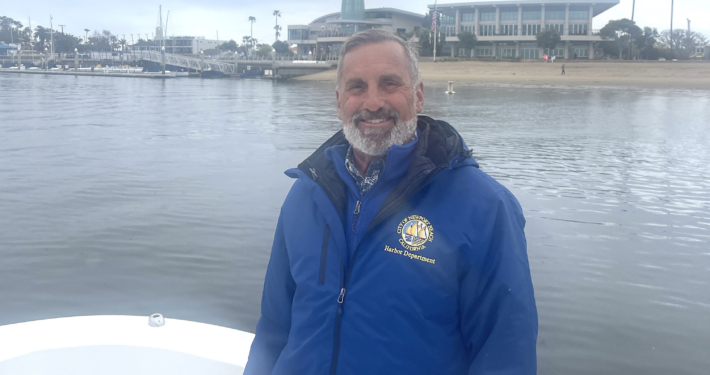
The Harbor Department continues to deliver on its mission to keep Newport Harbor clean, safe, and well-enjoyed. A key component of that mission is actively seeking opportunities to collaborate with partner agencies—local, state, and federal—to bring additional resources and capabilities to Newport Harbor.

The Harbor and Invasive Algae
By Devon Kelly
Caulerpa Prolifera is an invasive aquatic species that is not native to California. It grows quickly and spreads aggressively, forming dense mats that smother native vegetation and alter the harbor’s underwater landscape.
Balboa Island Ferry Electrification Update
By NHF Staff
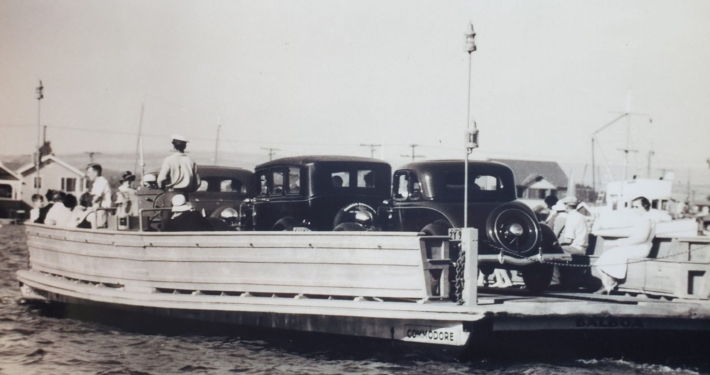
Great news for Newport Beach and ferry lovers everywhere! The beloved Balboa Island Ferry, which has been shuttling passengers and vehicles across the harbor for over 100 years, is embarking on an exciting journey toward a cleaner, greener future. After facing potential closure due to California’s stricter emissions regulations, the ferry has secured crucial funding to electrify its entire fleet.

2026 State of the Bay Luncheon
Join Us for the Third Annual State of the Bay Luncheon on Wednesday, May 13th, at the Newport Harbor Yacht Club. Click on the link for all the details and a sign-up link

