

Report — Abandoned and Derelict Vessels
I hope the following information, reflecting our efforts on abandoned and derelict vessels in Newport Harbor, is helpful.
Since I assumed my role as Harbormaster, the City has taken decisive action to remove numerous abandoned or voluntarily surrendered vessels from Newport Harbor. These removals are vital for safety, navigation, and environmental protection. However, the process to secure legal authority for the removal and destruction of a privately owned vessel is necessarily lengthy and complex. To protect the City’s interests, we strictly adhere to all established legal procedures. In one recent example, the process required over two years, the formal arrest of a vessel, the engagement of outside maritime legal counsel, and two Federal Court actions.
Here’s a summary of all the abandoned or surrendered boats removed from Newport Harbor since I became Harbormaster:

Although the removal numbers demonstrate that we have made meaningful progress—often at significant cost to taxpayers—we continue to see vessels enter Newport Harbor that are likely to be abandoned or surrendered in the future. The good news is that Newport Beach has the laws and resources in place to address these situations before they become major hazards. By contrast, I recently observed six sunken vessels left languishing on the breakwater at the entrance to San Diego Harbor, where the lack of adequate legal tools and resources has allowed serious safety and water-quality risks to persist and worsen.
The Harbor Department has effectively leveraged the State of California’s Surrendered and Abandoned Vessel Exchange (SAVE) Grant to remove unsafe, unsightly, and environmentally hazardous vessels from Newport Harbor. In each of the last two grant cycles, the City received $175,000 and fully expended those funds.
Based on this strong performance, the Department was encouraged to apply for $250,000 in the upcoming grant cycle. However, statewide budget reductions reduced the overall SAVE program allocation to $1 million and capped individual awards at 10 percent of that total. As a result, the City received the maximum available award of $100,000 for the grant cycle beginning January 1, 2026, and running through September 30, 2027.

At present, six known abandoned vessels require destruction at a cost exceeding $100,000, which will fully consume the grant funds at the outset of the cycle. Accordingly, through the City’s Program Enhancement Request process, I have requested $150,000 in additional City funding specifically to address the shortfall for vessel destruction. If approved, these funds would become available on July 1, 2026.
Given the reduced availability of state funding and the ongoing need to protect public safety, navigation, and water quality in the harbor, supplemental City funding is essential to sustain this critical public-service program. Without it, vessels that are inevitably abandoned or surrendered may remain in the harbor longer than is acceptable, creating avoidable risks and environmental impacts. If the City’s funding request is not approved, or if demand increases significantly, I will continue to seek alternative funding sources to close any gaps.
I appreciate your interest in Newport Harbor’s health and safety.
Warm regards,
Paul Blank
Harbormaster
Harbor Department
City of Newport Beach
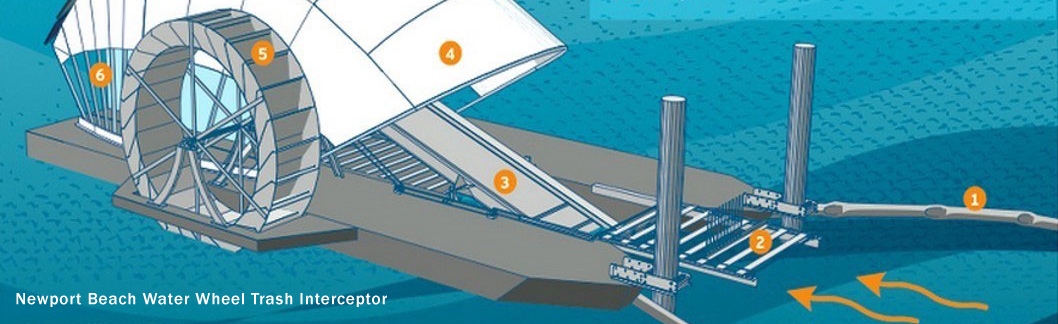
March showers have given way to April flowers. The recent storms left in their wake perfect conditions throughout Southern California for thriving vegetation – a super bloom resulting in lush landscapes carpeted with abundant wildflowers.
The storms also replenished many of our major water supply reservoirs and significantly refilled our groundwater basin, resulting in higher-than-average levels compared to many years when these resources remained in limited supply indefinitely.
These same storms have another, less favorable effect on our community, as Newport Beach is at the end of the water “pipe” when it comes to trash and debris flow.
Newport Beach has a handful of iconic attractions that have stood the test of time: The Newport Pier, which replaced the original McFadden Wharf (1888-1939) and is registered as a California Historical Landmark; the Balboa Pavilion, which opened on July 1, 1906 and is the city’s oldest standing building; and the Balboa Island Ferry, which went into service in 1919 to bring cars and passengers across 900 feet of water between Balboa Island and the Balboa Fun Zone.
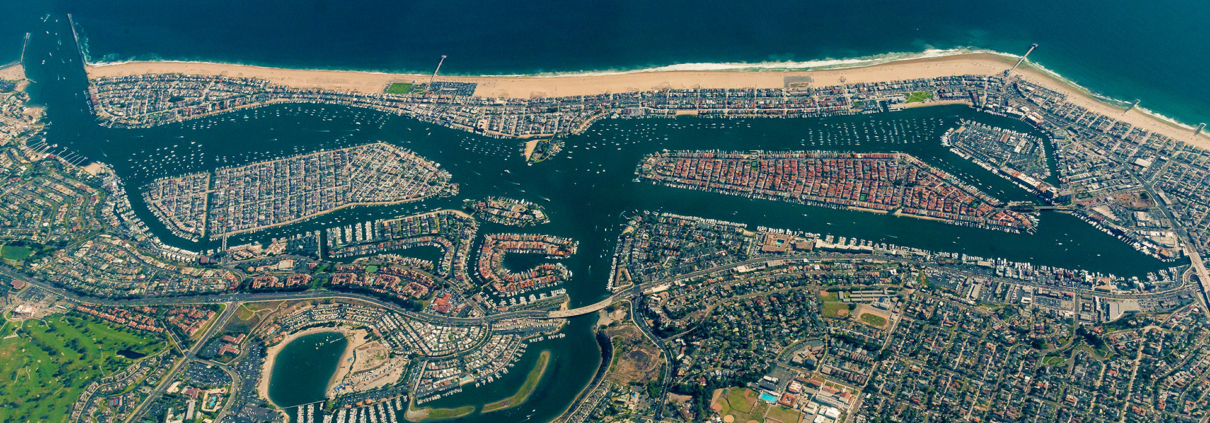
All permits are in place for the U.S. Army Corps of Engineers to dredge channels in Lower Newport Bay and bury any contaminated sediment in a massive underwater pit at the heart of Newport Harbor.
But the project is now facing multiple legal challenges that could slow it down or thwart it entirely, as resident and environmental groups that tried to block those permits cite ongoing concerns over risks to marine life and bay contamination.

Share this entry