
Legal challenges loom as plans to dredge Newport Harbor, bury contaminated sediment inch forward

By Brooke Staggs The Orange County Register – March 16, 2023

Source: Stars And Stripes Legal challenges loom as plans to dredge Newport Harbor, bury contaminated sediment inch forward
(Tribune News Service) — All permits are in place for the U.S. Army Corps of Engineers to dredge channels in Lower Newport Bay and bury any contaminated sediment in a massive underwater pit at the heart of Newport Harbor.

But the project is now facing multiple legal challenges that could slow it down or thwart it entirely, as resident and environmental groups that tried to block those permits cite ongoing concerns over risks to marine life and bay contamination.

Already, work on the project is progressing slower than expected. And while efforts to clear sediment brought into channels by tides, boats and storms were expected to start last fall, the Army Corps hasn’t yet put the project out to bid.

“We had anticipated being further along at this point,” said Chris Miller, a manager with Newport Beach’s Public Works department who’s been overseeing the project. He cited standard processes on the Corps’ side to wrap up construction documents as reason for the delay.

Opponents aim to argue in court that those plans still don’t include sufficient analysis and safeguards to protect Newport Harbor.

Friends of Newport Harbor, a coalition of seaside residents that includes tech billionaire Palmer Luckey, sued the California Coastal Commission and the city of Newport Beach in late November over the project. Their lawsuit, filed in Orange County Superior Court, alleges the commission and city violated the Coastal Act and California Environmental Quality Act by approving the plan. A hearing on the case is set for July 11.

“This isn’t a problem solved. This is just sweeping the problem under the rug,” said Shana Conzelman, a Lido Island resident and volunteer director with Friends of Newport Harbor, of plans to bury contaminated sediment in the harbor.

The resident group also sued the Army Corps in federal court in late February for failing to respond to requests for public information. They said in a statement that they “refuse to allow the Corps’ stonewalling to rob us and other concerned residents of Orange County of our right to oppose this environmentally disastrous project, both in court and through grass-roots political efforts.”

Shortly after that suit was filed, Conzelman said they received some information from the Army Corps and Newport Beach, but not all of the documents they’d requested. She said her group is working with three different law firms and considering additional legal action.

A third suit will likely come from the environmental group Orange County Coastkeeper. On Jan. 5, the organization sent written notice to the Army Corps and heads of other federal agencies about plans to sue in 60 days if additional studies weren’t completed to see how the project could affect endangered and threatened species in the area, including green sea turtles.

That 60-day window expires this weekend. As of Wednesday, Matt Sylvester with Orange County Coastkeeper said they hadn’t heard back from the federal agencies.

This project has been in the works for more than four years.

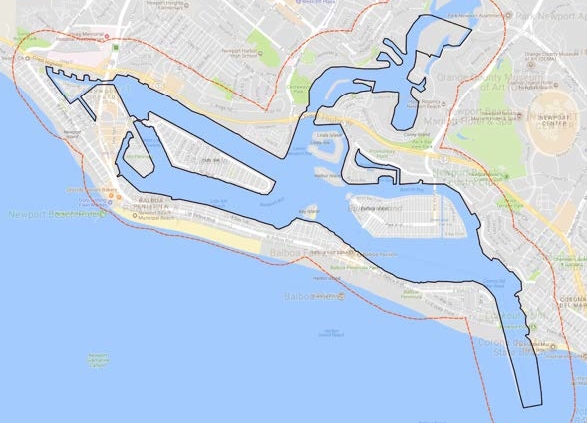
The Army Corps received permits in early 2022 to clear 879,900 cubic yards of material from navigational channels in Lower Newport Harbor that could pose problems for some 10,000 vessels based there. But before dredging could start, Newport Beach needed a permitted plan in place to deal with any contaminated material crews dig up.

Testing indicated most material in the dredging area was clean enough for ocean disposal, at a site six miles offshore. However, some 112,500 cubic yards of sediment showed elevated levels of mercury and industrial chemicals such as DDT.

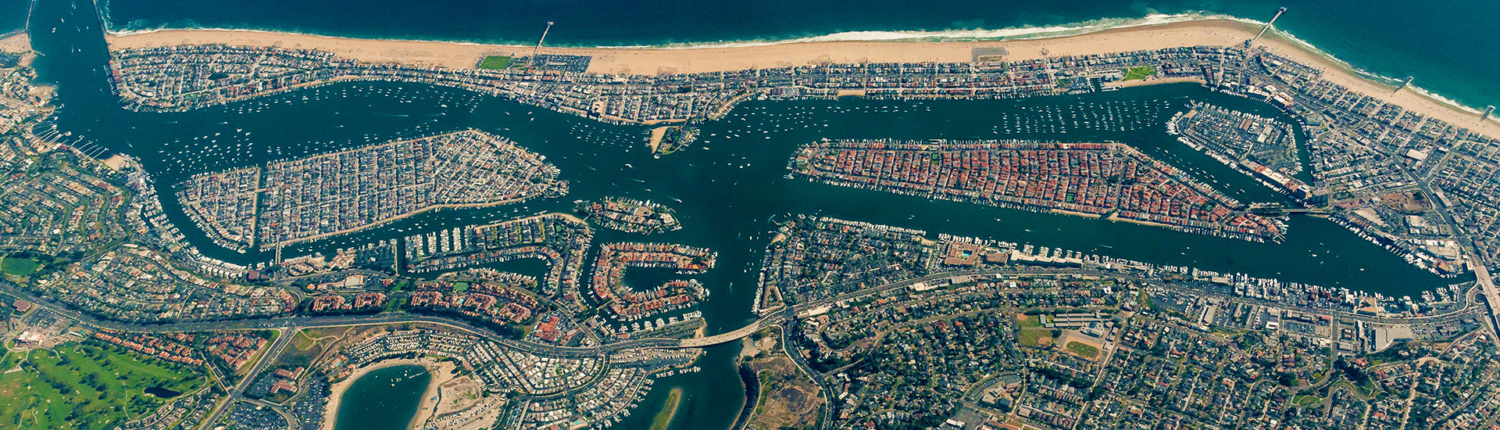
The city’s solution calls for digging a hole 590 feet wide, 590 feet long and 46 feet deep in the center of the lower harbor, directly between Bay Island, Lido Isle and Harbor Island, to create what is termed a confined aquatic disposal pit, or CAD. Crews then would take contaminated sediment from the channels, drop it in the 8-acre pit and cover it with a layer of clean sand.

Eventually, the city plans to have three feet of clean sand as a barrier. But first, city leaders saw an opportunity to give harbor residents and businesses — who often ask to dredge around their own properties to add docks or other facilities — an option to add their own sediment to the CAD. So for at least two years, until material from those other projects gets added to the pit, the CAD will be capped with just one foot of clean sand.

Having such a thin layer of sand between boat anchors and contaminated sediment in water 20 feet deep worries residents and environmental groups. They’ve also flagged how plumes of sediment might contaminate surrounding waters as the material is dumped into the CAD. So they asked regulators to consider alternatives, such as moving the material to land where it can be isolated or cleaned up.

Test results, checking for sediment contamination, were originally valid through the end of 2022. But Miller said regulators approved an extension so they could keep the project moving forward.

“There have not been any significant events since we tested, so there isn’t any real reason to suspect that it has changed,” Jim Fields, project manager with the Army Corps’ Los Angeles District, said Wednesday.

Field said the agency now plans to put the contract out to bid on March 23 and hopes to finish work in fall 2024.


©2023 MediaNews Group, Inc.

Source: Stars And Stripes Legal challenges loom as plans to dredge Newport Harbor, bury contaminated sediment inch forward
Visit ocregister.com.

Distributed by Tribune Content Agency, LLC.

Newport Harbor Fiscal Area
Newport Harbor Dredging Project

By Laylan Connelly – Orange County Register

Officials have secured $8.3 million to dredge Newport Harbor in the $14 billion Infrastructure Investment and Jobs Act, but sand replenishment projects for two stretches of Orange County coastline were not included.

U.S. Rep. Michelle Steel said dredging of Newport Beach’s harbor is long overdue in her announcement Wednesday, Jan. 19, about the federal funding, but also stressed the need for added sand along the coastline. Funding for the Surfside-Sunset Replenishment Project, which would seed beaches through Huntington Beach south to Newport Beach will have to hope for final approval from another Congressional appropriations bill, the timeline of which has been unclear.

So is the San Clemente Shoreline Project, which would replenish beaches in the southern city, including improving the buffer of shoreline along a key coastal rail line.

Both projects have been stalled for years, awaiting funding for U.S. Army Corps of Engineers to do the replenishments that help create a beach buffer that would protect roads, homes and infrastructure from ocean flooding, as well as keep beaches – one of the region’s major tourism draws – from disappearing.

In 1962, Congress passed the Rivers and Harbors Act, which required the Army Corps of Engineers to address the impacts of the constructed flood control structures on the sand deposits that should be happening naturally along shorelines.

The $23 million Surfside-Sunset project – $15.5 million in federal money and $7.63 from local agencies – would add 1.75 million cubic yards of sand to Surfside, which would then be pushed down the coast by ocean currents and waves, spreading it 12 miles south to Newport Beach.

The last time sand was added was 2010 – previously the replenishment happened every five to seven years.

“There is more work to do, and I will continue to demand action from the administration and the Army Corps to fully fund the Surfside-Sunset Replenishment Project because we are one natural disaster away from devastation,” Steel said in a statement.

San Clemente has been waiting about two decades for its big replenishment project. The city two years ago received a boost in the amount of $500,000 in federal funding for the design phase.

With no beach left, a wave crashes against the rocks and stairs just below the railroad tracks at North Beach in San Clemente on Wednesday, October 20, 2021.(Photo by Mark Rightmire, Orange County Register/SCNG)

The project would add 251,000 cubic yards of sand from Linda Lane beach to T-Street beach south of the pier. The sand has shrunk so much there in recent years, city leaders have discussed the possibly of moving San Clemente’s Marine Safety Headquarters off the beach. When big surf hits, the surf laps onto the railroad tracks.

About $9.3 million was requested in the bipartisan infrastructure bill by U.S. Rep. Mike Levin for the San Clemente Shoreline Project.

Levin helped secure $30.5 million in federal funding for the Encinitas-Solana Beach Coastal Storm Damage Reduction Project and $1.8 million for the Oceanside Special Shoreline Study, his office announced Wednesday.

The Encinitas-Solana Beach project involves placing 700,000 cubic yards of sand along 7,200 feet of beach in Solana Beach and 340,000 cubic yards of sand along 7,800 feet of beach in Encinitas.

The Oceanside shoreline study will create a plan to mitigate erosion and other effects from the construction of Camp Pendleton Harbor and will restore beach conditions along the affected shores to the conditions that existed before its development.

Levin’s office said he is also “continuing to fight to finalize federal funding for the San Clemente Shoreline Project.”

Read more at the Orange County Register…