
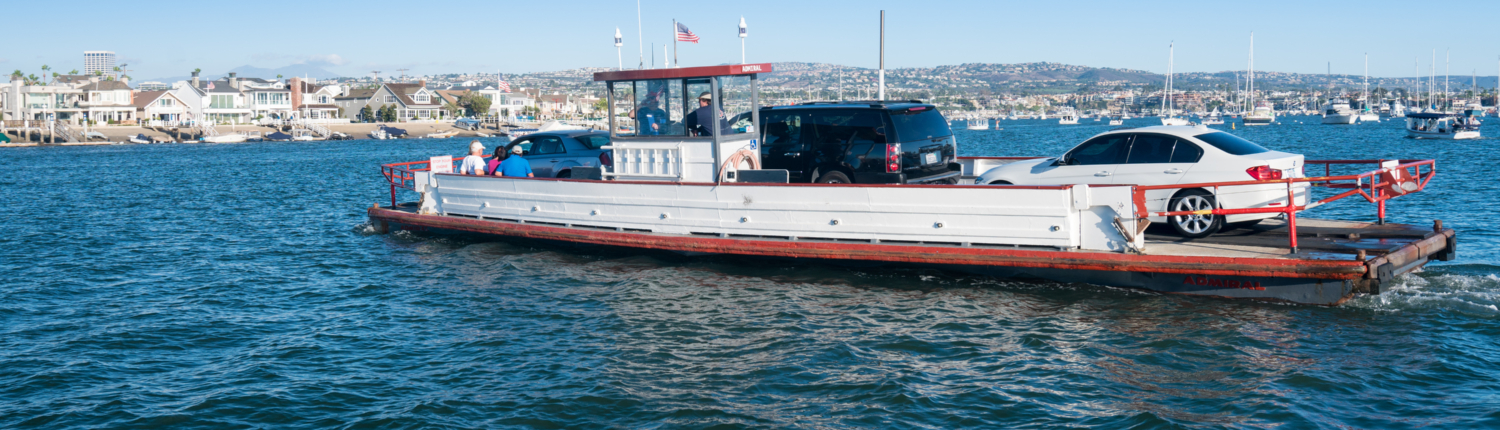
Could a solution to the Balboa Ferry’s future be at hand?
By Gary Sherwin – July 18, 2023
Source: Stu News Newport Could a solution to the Balboa Ferry’s future be at hand?

Gary Sherwin
For the last several months, I’ve been writing about the monumental challenges involving the beloved ferry’s status, given a state mandate for it to convert to electric engines, just like the demands faced by auto companies to change by 2035. For some reason, however, the ferry needs to swap out these engines by the end of 2024. If it doesn’t, it’s out of business.
The Balboa Ferry is a beloved local attraction and one of our most popular with visitors. It is an iconic part of our city and is featured in travel outlets globally as one of the best things to do while in Newport Beach. Losing it would be a tragedy.
California has been leading the way nationally in the development of clean energy technology. It was decided that if you have a motor in just about anything, including leaf blowers, you will need to move to electric. And you apparently need to do it now.
Of course, that isn’t easy. The difficulty with all of this from the beginning has not been a reluctance to change the engines at the ferry; it has been the lack of technology to convert old wooden barges, which is really what the ferry is, and put in electric motors. It’s not like you can drop into Home Depot and pick one up. It just doesn’t exist.
And perhaps the biggest issue of all is the huge price tag to make this unfunded mandate happen, and those costs are skyrocketing.
However, there has been some good news lately on all of that, although the ferry is far from out of the woods.
Last week, Assemblywoman Diane Dixon met with the California Air Resource Board (CARB) Executive Officer, Dr. Steven Cliff, to move the issue forward. CARB is the regulatory agency overseeing the compliance, and Dixon indicated that they are engaged on the issue and said that if the Beek Family, which owns and operates the ferry, is committed to pursuing solutions to move to compliance with the ferry, they would not shut it down when the deadline comes next year.
CARB said they have heard plenty from the community and understand the importance of the ferry to Newport Beach. They want to work with them on grants and other ways to make the change possible.
But dealing with a huge government entity like CARB, which has 1,700 employees and a budget of $2.7 billion, is not easy. There is tons of paperwork, and Seymour Beek, who runs the ferry, has had his nephew Joe Beek, an attorney, take the lead. The details of filling out numerous grants are mind-numbing.
Another positive sign is the expected contract signing this week with San Diego-based Aurora Marine Design and Green Yachts, which will work together to see if a conversion on the vessels is even realistic.
The Beeks are paying $100,000 for this study themselves, and we’ll know by Christmas if the wooden boats can be retrofitted.
In the meantime, the expected costs to make the conversion happen have now gone from an estimated $5 million to nearly $11 million, some of which may be covered by grants. The rest will likely have to come from a community-based fundraising effort since the family-owned ferry probably can’t do that on its own. Nothing is cheap these days, especially a complex project like this one.
The goal is to keep the wooden ferries “as is,” rather than building all new ones, perhaps in another material like aluminum which certainly changes the historic charm of the attraction.
According to Joe Beek, it is a bit like remodeling a house. Some contractors will tell you that it might be cheaper to demolish an old place and start over, which could be the case for the ferry if a technical solution can’t be found.
The other issue is Coast Guard approval. They need to sign off once the conversion takes place and if they don’t feel comfortable with electric engines on old wooden boats, then they will stop operations despite CARB’s approval.
Aurora’s first goal is to see if the conversion can occur and what that looks like or if new boats need to be built. After that, phase two begins, and the Beeks will need a solution because that’s when the big costs kick in. Even with grants, some things will not be covered, like sales tax on materials which are expected to run as high as $150,000, according to Joe Beek.
While some grants will provide perhaps $1.5 million for equipment purchases, they also don’t cover the management costs of the project. The ferry has only one full-time management employee and Joe Beek was roped into the project by Seymour and is volunteering his time as a devoted family member. This is a huge burden on a very small family business.
CARB has said that the ferry does qualify for a deadline extension which they can apply for two of the ferries that can last up to two years. They may continue to apply for additional extensions if they are working in good faith on conversion, which the Beeks have said they will do.
One of the often-discussed solutions to the ferry dilemma by local wags is just to increase the ferry’s fares which are an amazing $2 per passenger, admittedly a pretty good deal. However, surprisingly, the ferry doesn’t have control over its own fares. The California Public Utility Commission decides these things, and they are reluctant to do that since they opt to keep transportation fares as low as possible. That squeezes the ferry since they can’t control their revenue despite rising costs.
So, the good news is that CARB sees the value of the ferry and has heard the public outcry about keeping it afloat. That’s a tribute to extensive media coverage and an online petition that generated thousands of signatures.
In the meantime, Joe Beek is buried in CARB grant paperwork and navigating the complex grant approval process. Luckily, he is an attorney and is somewhat used to this, but to a mere mortal, it would be a near-impossible challenge. State bureaucracy is never easy to navigate.
The really important point to note is that absolutely none of this makes business sense. For the ferry to shell out $100,000 to hire a marine design company, that is about one year’s operating profit. It’s a small business that generates $2 million gross on a good year. Many ferry owners would have just thrown in the towel and called it a day. Most businesspeople wouldn’t blame them.
Yet the Beeks remain committed and are working to find a solution, even if it is expensive and they will never recover the costs they are sinking into this.
The Beeks are devoted to this ferry and doing whatever they can to keep it operating. We should all be thankful that they are, as should everyone in Newport Beach who cherishes this important community asset.
Gary Sherwin is President & CEO of Visit Newport Beach and Newport Beach & Company.
Source: Stu News Newport Could a solution to the Balboa Ferry’s future be at hand?
By Laylan Connelly – Orange County Register
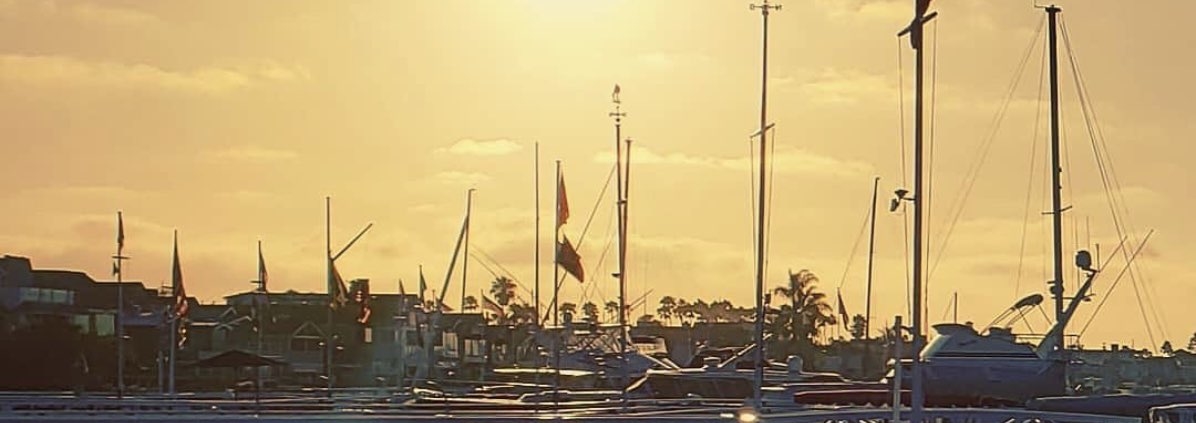
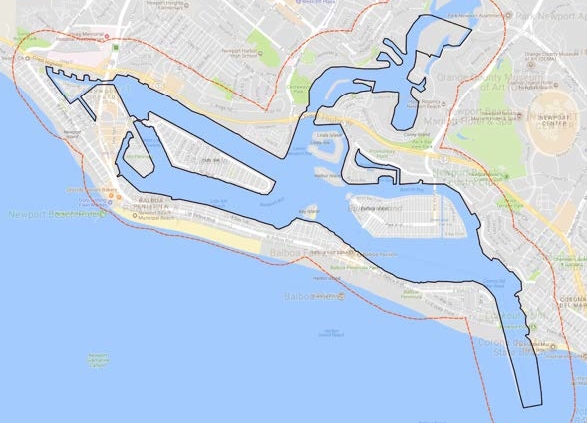
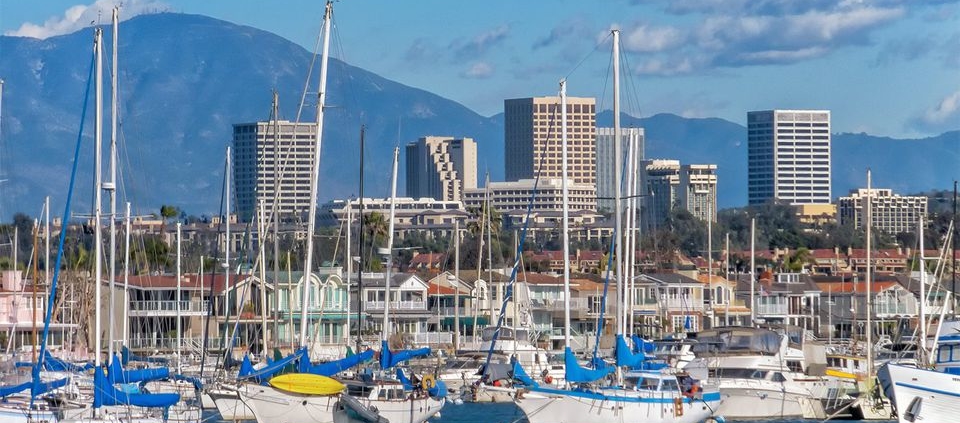
Officials have secured $8.3 million to dredge Newport Harbor in the $14 billion Infrastructure Investment and Jobs Act, but sand replenishment projects for two stretches of Orange County coastline were not included.
U.S. Rep. Michelle Steel said dredging of Newport Beach’s harbor is long overdue in her announcement Wednesday, Jan. 19, about the federal funding, but also stressed the need for added sand along the coastline. Funding for the Surfside-Sunset Replenishment Project, which would seed beaches through Huntington Beach south to Newport Beach will have to hope for final approval from another Congressional appropriations bill, the timeline of which has been unclear.
So is the San Clemente Shoreline Project, which would replenish beaches in the southern city, including improving the buffer of shoreline along a key coastal rail line.
Both projects have been stalled for years, awaiting funding for U.S. Army Corps of Engineers to do the replenishments that help create a beach buffer that would protect roads, homes and infrastructure from ocean flooding, as well as keep beaches – one of the region’s major tourism draws – from disappearing.
In 1962, Congress passed the Rivers and Harbors Act, which required the Army Corps of Engineers to address the impacts of the constructed flood control structures on the sand deposits that should be happening naturally along shorelines.
The $23 million Surfside-Sunset project – $15.5 million in federal money and $7.63 from local agencies – would add 1.75 million cubic yards of sand to Surfside, which would then be pushed down the coast by ocean currents and waves, spreading it 12 miles south to Newport Beach.
The last time sand was added was 2010 – previously the replenishment happened every five to seven years.
“There is more work to do, and I will continue to demand action from the administration and the Army Corps to fully fund the Surfside-Sunset Replenishment Project because we are one natural disaster away from devastation,” Steel said in a statement.
San Clemente has been waiting about two decades for its big replenishment project. The city two years ago received a boost in the amount of $500,000 in federal funding for the design phase.
With no beach left, a wave crashes against the rocks and stairs just below the railroad tracks at North Beach in San Clemente on Wednesday, October 20, 2021.(Photo by Mark Rightmire, Orange County Register/SCNG)
The project would add 251,000 cubic yards of sand from Linda Lane beach to T-Street beach south of the pier. The sand has shrunk so much there in recent years, city leaders have discussed the possibly of moving San Clemente’s Marine Safety Headquarters off the beach. When big surf hits, the surf laps onto the railroad tracks.
About $9.3 million was requested in the bipartisan infrastructure bill by U.S. Rep. Mike Levin for the San Clemente Shoreline Project.
Levin helped secure $30.5 million in federal funding for the Encinitas-Solana Beach Coastal Storm Damage Reduction Project and $1.8 million for the Oceanside Special Shoreline Study, his office announced Wednesday.
The Encinitas-Solana Beach project involves placing 700,000 cubic yards of sand along 7,200 feet of beach in Solana Beach and 340,000 cubic yards of sand along 7,800 feet of beach in Encinitas.
The Oceanside shoreline study will create a plan to mitigate erosion and other effects from the construction of Camp Pendleton Harbor and will restore beach conditions along the affected shores to the conditions that existed before its development.
Levin’s office said he is also “continuing to fight to finalize federal funding for the San Clemente Shoreline Project.”

Share this entry