

Report — Abandoned and Derelict Vessels
I hope the following information, reflecting our efforts on abandoned and derelict vessels in Newport Harbor, is helpful.
Since I assumed my role as Harbormaster, the City has taken decisive action to remove numerous abandoned or voluntarily surrendered vessels from Newport Harbor. These removals are vital for safety, navigation, and environmental protection. However, the process to secure legal authority for the removal and destruction of a privately owned vessel is necessarily lengthy and complex. To protect the City’s interests, we strictly adhere to all established legal procedures. In one recent example, the process required over two years, the formal arrest of a vessel, the engagement of outside maritime legal counsel, and two Federal Court actions.
Here’s a summary of all the abandoned or surrendered boats removed from Newport Harbor since I became Harbormaster:

Although the removal numbers demonstrate that we have made meaningful progress—often at significant cost to taxpayers—we continue to see vessels enter Newport Harbor that are likely to be abandoned or surrendered in the future. The good news is that Newport Beach has the laws and resources in place to address these situations before they become major hazards. By contrast, I recently observed six sunken vessels left languishing on the breakwater at the entrance to San Diego Harbor, where the lack of adequate legal tools and resources has allowed serious safety and water-quality risks to persist and worsen.
The Harbor Department has effectively leveraged the State of California’s Surrendered and Abandoned Vessel Exchange (SAVE) Grant to remove unsafe, unsightly, and environmentally hazardous vessels from Newport Harbor. In each of the last two grant cycles, the City received $175,000 and fully expended those funds.
Based on this strong performance, the Department was encouraged to apply for $250,000 in the upcoming grant cycle. However, statewide budget reductions reduced the overall SAVE program allocation to $1 million and capped individual awards at 10 percent of that total. As a result, the City received the maximum available award of $100,000 for the grant cycle beginning January 1, 2026, and running through September 30, 2027.

At present, six known abandoned vessels require destruction at a cost exceeding $100,000, which will fully consume the grant funds at the outset of the cycle. Accordingly, through the City’s Program Enhancement Request process, I have requested $150,000 in additional City funding specifically to address the shortfall for vessel destruction. If approved, these funds would become available on July 1, 2026.
Given the reduced availability of state funding and the ongoing need to protect public safety, navigation, and water quality in the harbor, supplemental City funding is essential to sustain this critical public-service program. Without it, vessels that are inevitably abandoned or surrendered may remain in the harbor longer than is acceptable, creating avoidable risks and environmental impacts. If the City’s funding request is not approved, or if demand increases significantly, I will continue to seek alternative funding sources to close any gaps.
I appreciate your interest in Newport Harbor’s health and safety.
Warm regards,
Paul Blank
Harbormaster
Harbor Department
City of Newport Beach
By Laylan Connelly – Orange County Register
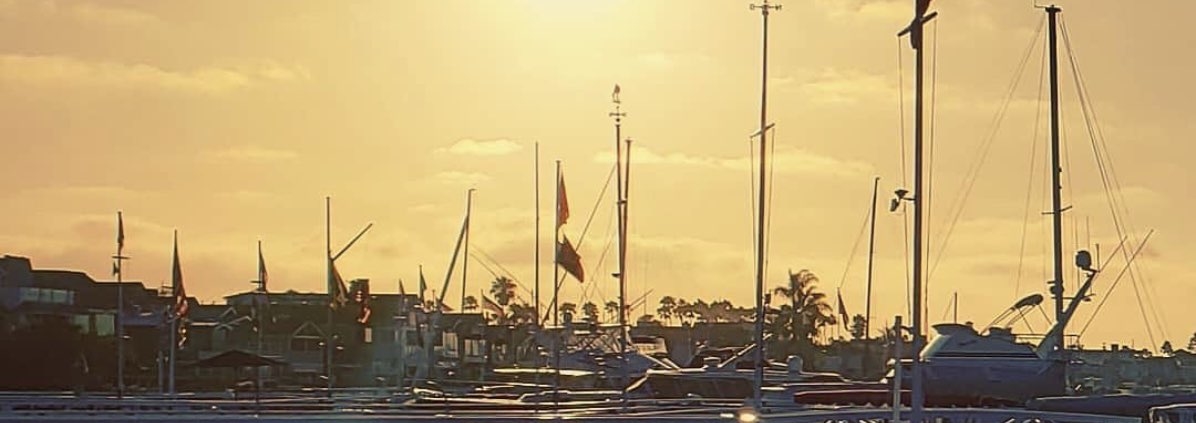
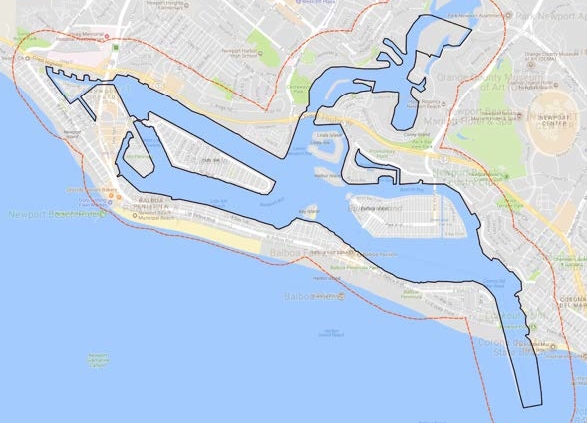
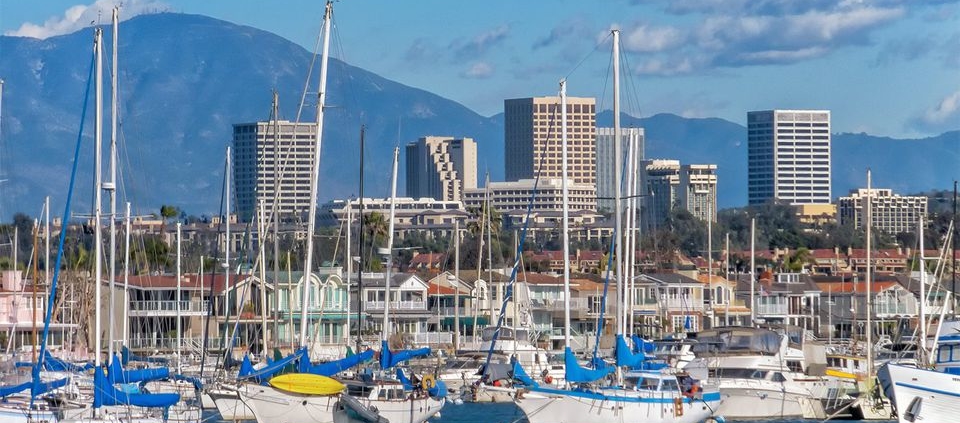
Officials have secured $8.3 million to dredge Newport Harbor in the $14 billion Infrastructure Investment and Jobs Act, but sand replenishment projects for two stretches of Orange County coastline were not included.
U.S. Rep. Michelle Steel said dredging of Newport Beach’s harbor is long overdue in her announcement Wednesday, Jan. 19, about the federal funding, but also stressed the need for added sand along the coastline. Funding for the Surfside-Sunset Replenishment Project, which would seed beaches through Huntington Beach south to Newport Beach will have to hope for final approval from another Congressional appropriations bill, the timeline of which has been unclear.
So is the San Clemente Shoreline Project, which would replenish beaches in the southern city, including improving the buffer of shoreline along a key coastal rail line.
Both projects have been stalled for years, awaiting funding for U.S. Army Corps of Engineers to do the replenishments that help create a beach buffer that would protect roads, homes and infrastructure from ocean flooding, as well as keep beaches – one of the region’s major tourism draws – from disappearing.
In 1962, Congress passed the Rivers and Harbors Act, which required the Army Corps of Engineers to address the impacts of the constructed flood control structures on the sand deposits that should be happening naturally along shorelines.
The $23 million Surfside-Sunset project – $15.5 million in federal money and $7.63 from local agencies – would add 1.75 million cubic yards of sand to Surfside, which would then be pushed down the coast by ocean currents and waves, spreading it 12 miles south to Newport Beach.
The last time sand was added was 2010 – previously the replenishment happened every five to seven years.
“There is more work to do, and I will continue to demand action from the administration and the Army Corps to fully fund the Surfside-Sunset Replenishment Project because we are one natural disaster away from devastation,” Steel said in a statement.
San Clemente has been waiting about two decades for its big replenishment project. The city two years ago received a boost in the amount of $500,000 in federal funding for the design phase.
With no beach left, a wave crashes against the rocks and stairs just below the railroad tracks at North Beach in San Clemente on Wednesday, October 20, 2021.(Photo by Mark Rightmire, Orange County Register/SCNG)
The project would add 251,000 cubic yards of sand from Linda Lane beach to T-Street beach south of the pier. The sand has shrunk so much there in recent years, city leaders have discussed the possibly of moving San Clemente’s Marine Safety Headquarters off the beach. When big surf hits, the surf laps onto the railroad tracks.
About $9.3 million was requested in the bipartisan infrastructure bill by U.S. Rep. Mike Levin for the San Clemente Shoreline Project.
Levin helped secure $30.5 million in federal funding for the Encinitas-Solana Beach Coastal Storm Damage Reduction Project and $1.8 million for the Oceanside Special Shoreline Study, his office announced Wednesday.
The Encinitas-Solana Beach project involves placing 700,000 cubic yards of sand along 7,200 feet of beach in Solana Beach and 340,000 cubic yards of sand along 7,800 feet of beach in Encinitas.
The Oceanside shoreline study will create a plan to mitigate erosion and other effects from the construction of Camp Pendleton Harbor and will restore beach conditions along the affected shores to the conditions that existed before its development.
Levin’s office said he is also “continuing to fight to finalize federal funding for the San Clemente Shoreline Project.”

Share this entry